

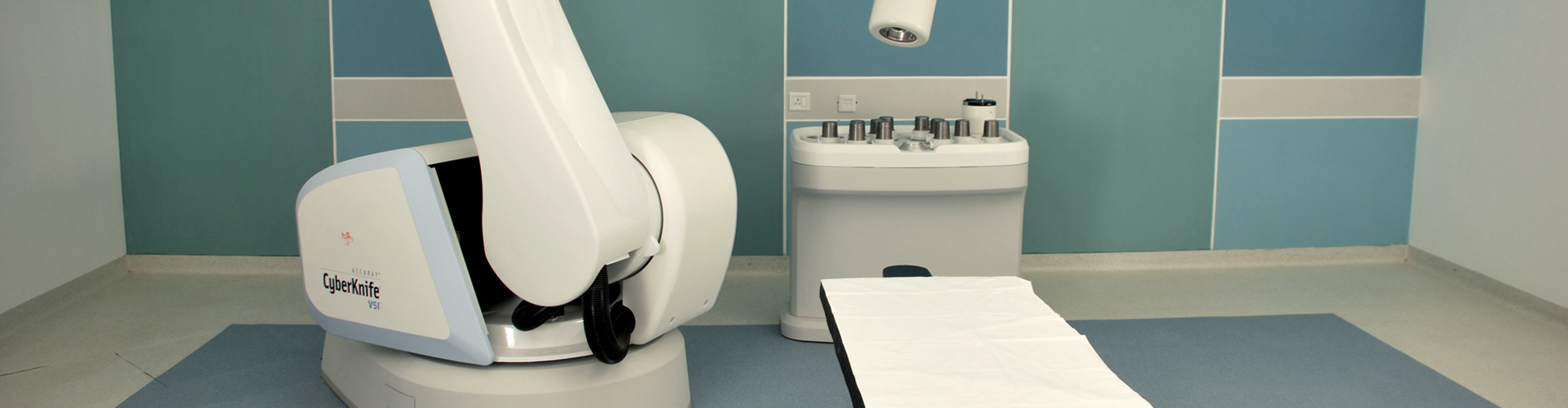
The CyberKnife VSI Robotic Radiosurgery System is a non-invasive alternative to surgery for the treatment of both cancerous and non-cancerous tumours anywhere in the body including the Prostate, Lung,.....
The CyberKnife VSI Robotic Radiosurgery System is a non-invasive alternative to surgery for the treatment of both cancerous and non-cancerous tumours anywhere in the body including the Prostate, Lung, Brain, Spine, Liver, Pancreas and Kidney. The treatment delivering beams of high-dose radiation to tumours with extreme accuracy offers new hope to patients worldwide. Though its name may conjure images of scalpels and surgery, the CyberKnife VSI treatment involves no cutting. In fact, the CyberKnife VSI System is the world’s first and only Robotic Radiosurgery system designed to treat tumours throughout the body non-invasively. It provides a pain-free, non-surgical option for patients who have inoperable or surgically complex tumours or who may be looking for an alternative to surgery. A robotic arm is used in this technology to engage the radiation rays with any part of the body. A Lightweight Linear Accelerator, commonly abbreviated as LINAC, is involved with a Robotic arm, ensuring view from different angles.
The invention of CyberKnife is a great help to patients dealing with complex tumours, offering precision treatment without surgery.
CyberKnife delivers high-dose, highly precise radiation as a non-invasive alternative to surgery. It is ideal for treating non-cancerous tumours without anaesthesia, blood loss, or long recovery times.

CyberKnife is highly effective in treating brain cancers, including recurrent or residual tumours. It delivers focused radiation to protect healthy brain tissue while achieving excellent tumour control.

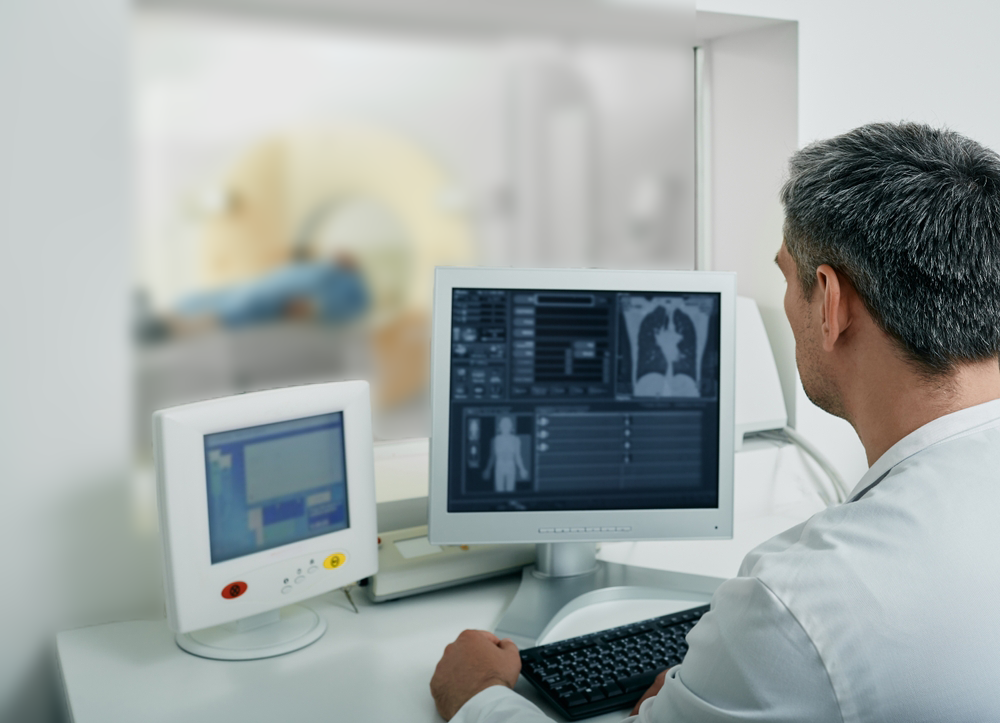
Preparing for CyberKnife
- Evaluation: A multidisciplinary oncology team evaluates the patient and designs a personalized care plan.
- Imaging: CT/MRI/PET scans precisely map the tumor and surrounding structures.
- Fiducials: Tiny markers may be placed to improve targeting accuracy.

During the Treatment
- The patient lies comfortably while the robotic system delivers radiation.
- Real-time imaging ensures precise tumor tracking.
- 1–5 sessions may be required, each lasting around an hour.

After the Treatment
- Most patients can return home the same day.
- Side effects are minimal and depend on tumor location.
- Follow-up schedules are personalized by the care team.
Though the name may bring an image of scissors and a scalpel, this technology is completely non-invasive and painless.
-
- Highly accurate targeting of tumour lesions
- Painless treatment requiring no anaesthesia
- Non-invasive procedure with no blood loss
- Minimal exposure to surrounding healthy tissue
- No hospitalisation required
- Minimal or no post-treatment complications
-
- Temporary fatigue
- Mild nausea
- Occasional headache
- Short-term side effects depending on treatment area

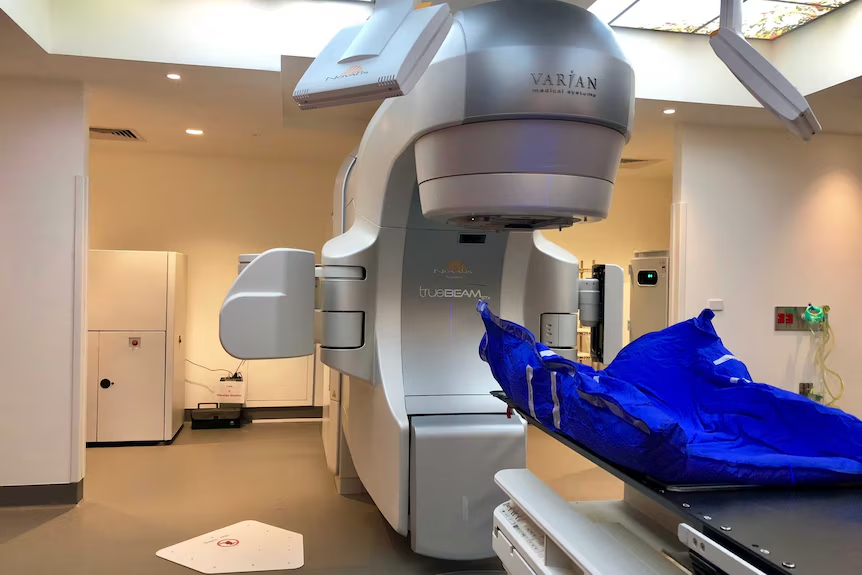
• Unrivalled accuracy: The CyberKnife system can treat moving tumours with pinpoint accuracy, which is unmatched by other radiosurgery systems. This is especially important when treating tumours that move with any body function (e.g., breathing).
• Unlimited flexibility and freedom: The CyberKnife system’s robotic manoeuvrability allows doctors to deliver highly individualised treatments. With a linear accelerator mounted on a flexible robotic arm, CyberKnife clinicians at Suryoday Cancer Center can select various angles targeting the tumour with a high dose of radiation from every conceivable angle.
• Real-time image guidance: The CyberKnife uses a very sophisticated 6D image guidance system to track and continually adjust treatment for any movement of the patient or tumour.
• Convenient: Depending on the type of tumour, patients need only one to five CyberKnife treatments, typically lasting less than an hour each, while other radiation systems require dozens of treatments spread over several weeks.
• Patient safety: Unlike other gantry based linear accelerators, the CyberKnife operates on a fully integrated closed loop system. Each function works in unison to ensure the safest possible patient experience.